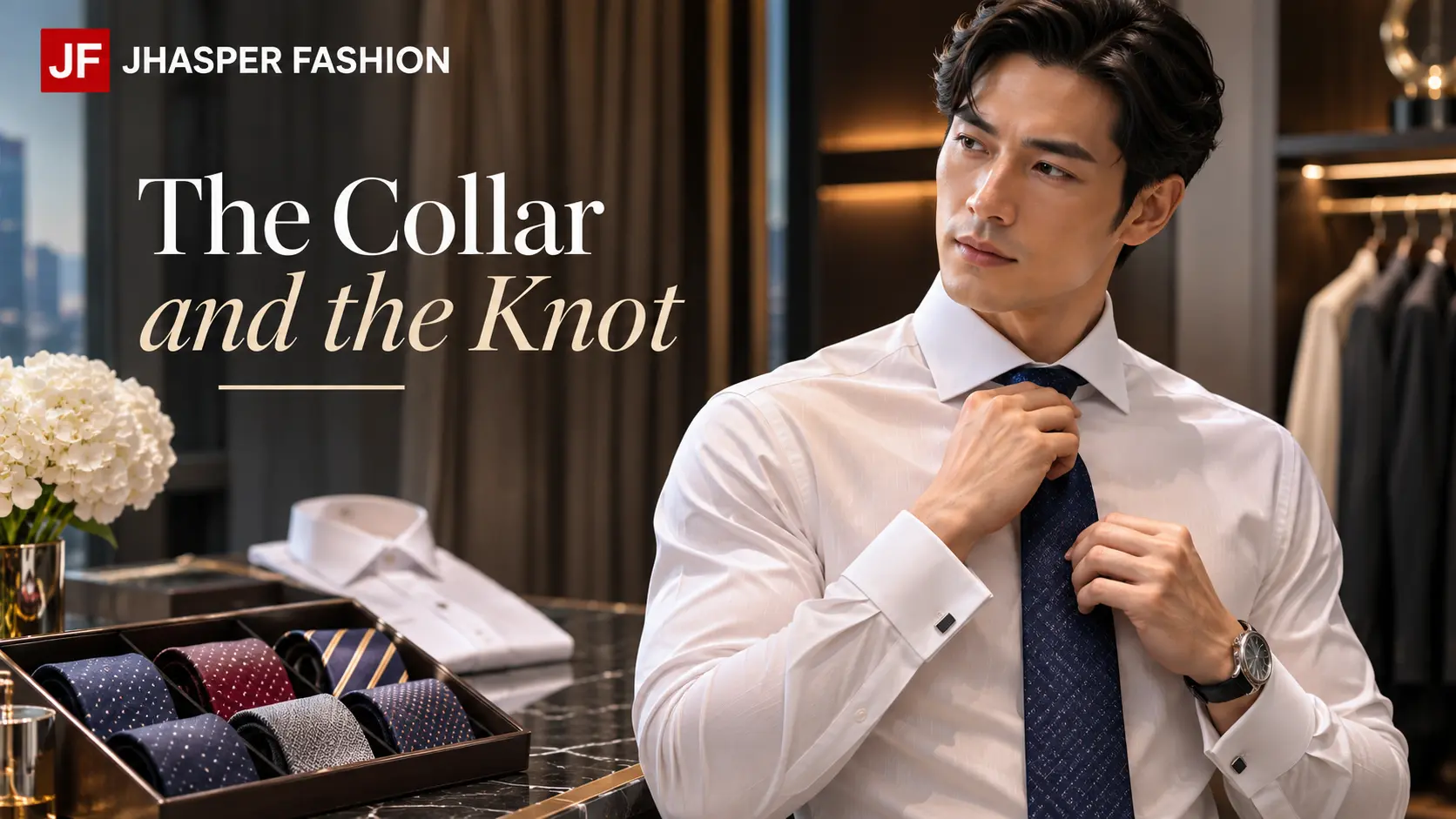

A new shirt can look convincing on its own and strangely unfinished with your favorite tie. The knot may seem lost between the collar points, or it may push against them. Before choosing another collar, bring the ties you actually wear into the decision. Their thickness, the knots you tie, and the space around those knots tell you more than a collar photograph does.
Bring the Ties You Actually Wear
Choose a small, representative selection from your drawer: Perhaps the smooth silk tie you wear to formal meetings and a fuller woven tie you reach for with a separate jacket. These are examples, not a shopping list. If one particular tie matters because you wear it for a recurring occasion, including it even if it is unlike the others.
Handle each tie where the knot normally forms. The width of the broad end is not the whole story. Cloth thickness and internal construction affect how much material gathers at the neck. Two ties with similar outlines can produce quite different knots, so a measurement taken at the tip cannot settle which collar will feel right.
Start with a familiar knot. If you tie a four-in-hand without thinking, use it for the first comparison rather than learning an elaborate alternative in the fitting room. Tie it at the length you would actually wear, then settle the knot gently against the closed collar. Tightening it aggressively to force a smaller shape tells you little about the combination you will enjoy using.
Bring a shirt you already like as a reference if that helps explain the problem. You might appreciate how its collar frames a slim tie but dislike what happens with a thicker one. That comparison gives the shirtmaker a clear question. It also keeps the conversation centered on your own neckwear instead of an imagined wardrobe you would need to buy afterward.
Compare Knot Volume With Collar Space
Collar spread describes how far apart the points sit. Tie space is a separate detail: the opening between the collar leaves near the top button, where the knot sits. Point length, collar height, and firmness also affect the finished impression. You do not need to specify every dimension yourself, but it helps to know that asking for a wider spread does not describe every part of the collar.
Try two knots in the same tie before drawing a conclusion. A four-in-hand generally gives a narrower, slightly asymmetrical shape. A half Windsor generally creates a broader, more triangular knot. The actual result still depends on the tie and how it is tied. Neither shape is inherently more professional, and a small knot in an open spread can be a deliberate preference.
Imagine a thin navy tie that looks rather slight beneath a new spread collar. A half Windsor may give it the presence you wanted. Now imagine a thick, textured tie in that same shirt. A four-in-hand may sit more comfortably without crowding the opening. The useful discovery is not a permanent rule about spread collars; it is that two familiar ties may need different treatment.
Watch the collar as you settle each knot. Does the cloth lie comfortably around it, or do the points lift in a way you dislike? Is there a visible gap you enjoy as part of the style, or does it make the shirt look unfinished to you? Keep aesthetic judgments separate from discomfort. A collar can look pleasing while still feeling too tight when buttoned.
Change one thing at a time. Keep the shirt and tie constant while comparing knots, then return to your usual knot when comparing collars. Otherwise, a new tie, a different knot, and a different collar can produce an improvement without revealing why. You want a combination you can repeat on an ordinary morning, with enough tie length remaining for the result you prefer.
Avoid solving pressure at the neck by simply loosening the knot and calling the fit settled. Explain how the buttoned collar feels before adding the tie, then describe what changes afterward. The shirtmaker can evaluate the collar rather than leaving you to compensate for it every time you dress. Face-shape formulas are much less useful here than the actual shirt, tie, and wearer.
Make the Final Choice With the Jacket On
Put on the jacket you expect to wear with the new shirt. Its lapels frame the collar and reduce the area of the shirt you see, which can change your impression of the knot. Look straight ahead in the mirror, then turn slightly. Check whether the collar points stay where you like them and whether the knot still seems proportionate within the complete outfit.
For a shirt consultation with Jhasper Fashion, take the ties along and explain which combinations you want to preserve. Its published shirt styles include regular, semi-spread, and full-spread collars. Those options give the discussion a starting point; the ties show what the collar needs to accommodate. Ask to compare relevant examples where available rather than assuming a style name guarantees a particular result.
If you are choosing from a sample shirt, ask how its collar relates to the shirt being made for you. A sample can show a shape without reproducing your neck size, fabric, or selected construction. Make sure the agreed choice is recorded clearly, including any preference for a softer or crisper collar. A quick photograph can support that note, provided photography is permitted.
Finish with the tie you wear most often. Tie it yourself, settle the jacket, and check the result without continually arranging the collar. You may decide on one versatile shape or accept that a less frequently worn tie needs a different knot. The successful choice is the one that makes your existing ties easier to wear, with a collar that looks intentional and feels comfortable around your neck.
Also read