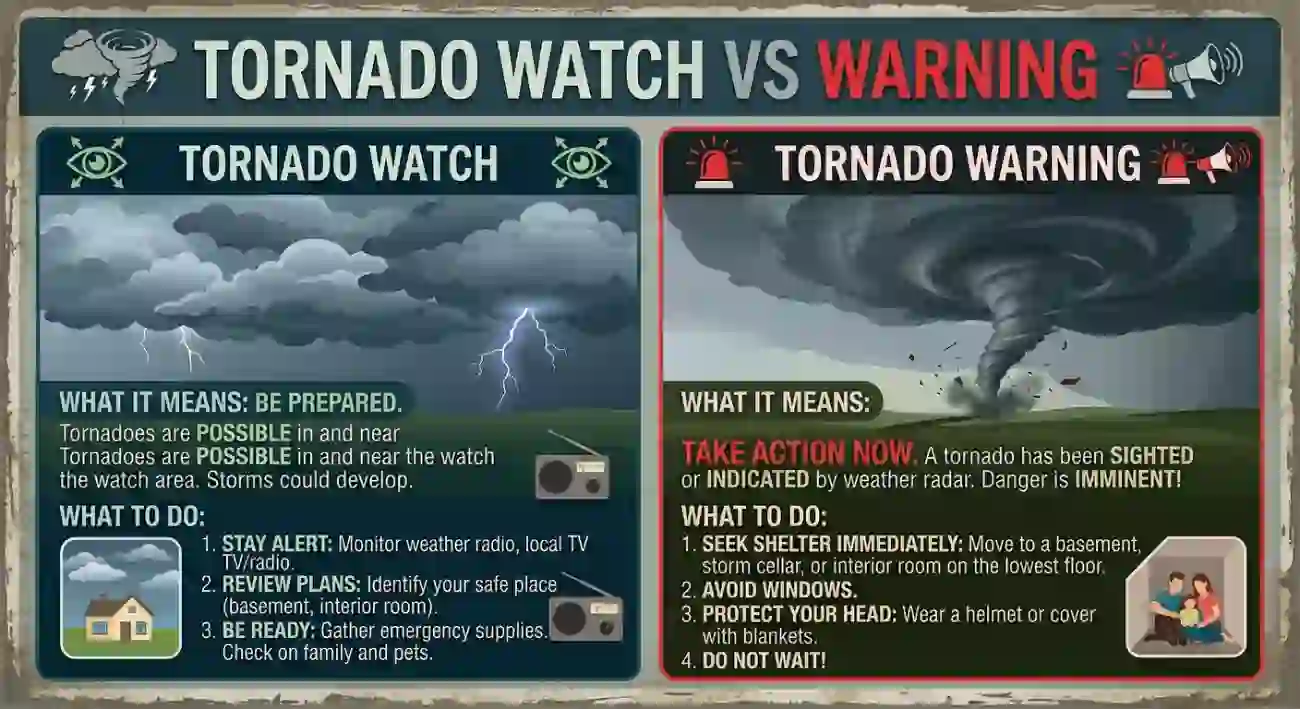

A tornado watch means tornadoes are possible in and near the watch area, so you should stay alert and be prepared. A tornado warning means a tornado has been detected or is imminent, so you should take shelter immediately. In simple terms: watch means prepare; warning means act.
Key Takeaways
- A tornado watch means conditions are favorable for tornadoes to develop.
- A tornado warning means a tornado has been spotted or indicated by radar and poses an immediate threat.
- Watches usually cover larger areas and give people time to prepare.
- Warnings usually cover smaller areas and require immediate action.
- During a warning, move to a sturdy shelter, preferably an interior room on the lowest floor and away from windows.
What Is the Difference Between a Tornado Watch and Warning?
The words watch and warning sound similar, but they represent two very different levels of concern.
A tornado watch is a heads-up. It means the weather conditions are favorable for tornadoes, but a tornado is not necessarily occurring where you are. The National Weather Service advises people under a watch to remain alert, review their safety plans, and be ready to act quickly.
A tornado warning is much more urgent. It means a tornado has been sighted or indicated by weather radar, creating an imminent danger to people and property in the warning area. When a warning is issued for your location, you should seek shelter immediately.
The easiest way to remember the difference is:
Watch = Be Prepared.
Warning = Take Action.
Tornado Watch vs Warning: Quick Comparison
| Feature | Tornado Watch | Tornado Warning |
| What it means | Tornadoes are possible | A tornado has been detected or is imminent |
| Main purpose | Give people time to prepare | Tell people to take immediate action |
| Area covered | Usually larger | Usually smaller |
| What you should do | Stay alert and prepare | Take shelter immediately |
| Issued by | NOAA Storm Prediction Center | Local National Weather Service forecast office |
| Threat level | Potential danger | Immediate danger |
The National Weather Service says tornado watches are issued by the Storm Prediction Center for areas where tornadoes may occur. Local forecast offices issue tornado warnings when a tornado is detected or considered imminent.
What Does a Tornado Watch Mean?
A tornado watch means tornadoes are possible in and near the designated area.
It does not mean a tornado has already formed. Instead, atmospheric conditions are favorable for severe thunderstorms that could produce tornadoes. A watch can cover numerous counties or even several states, depending on the weather setup.
Think of a watch as your opportunity to get ready before conditions become more dangerous.
During a tornado watch, you should:
- Check your local weather forecast.
- Know where you will shelter.
- Keep your phone charged.
- Make sure emergency supplies are accessible.
- Keep children and family members informed.
- Bring pets inside when appropriate.
- Monitor weather alerts for possible warnings.
You do not necessarily need to rush into your shelter just because a watch has been issued. However, you should be prepared to move there quickly if a warning is issued.
What Does a Tornado Warning Mean?
A tornado warning means the situation has become much more serious.
The National Weather Service issues a tornado warning when a tornado has been sighted or indicated by weather radar. A warning identifies an area where there is an imminent threat to life and property.
If you are inside the warning area, take shelter immediately.
Do not wait until you see a tornado. Tornadoes can be obscured by rain, darkness, buildings, or other weather conditions. The National Weather Service notes that a warning may leave people with only a short time to act.
The safest response is to get into a sturdy building and move to an interior room on the lowest floor, away from windows.
What Triggers a Warning?
A tornado warning can be based on information from weather radar or reports from trained observers and other reliable sources. The goal is to alert people when a tornado presents an immediate threat.
That means you should treat the warning as an action alert, not simply another forecast update.
What to Do During a Tornado Watch
A tornado watch is the time to prepare.
First, identify your safest available shelter. In a sturdy home or building, this is generally an interior room on the lowest floor, away from windows.
Next, monitor reliable weather information. Keep your phone nearby, and consider using NOAA Weather Radio or other official alert systems. The CDC also recommends staying tuned to local radio and television, NOAA Weather Radio, or internet-based alerts during severe weather.
If conditions worsen, be ready to move immediately.
A watch can end without a tornado occurring in your location. That does not mean the watch was unnecessary; it means the expected conditions did not result in a tornado affecting your area.
What to Do During a Tornado Warning
When a tornado warning is issued for your area, do not wait to see what happens.
Move to your predetermined safe location immediately. The National Weather Service recommends an interior room on the lowest floor of a sturdy building and advises staying away from windows.
If possible:
- Get indoors quickly.
- Move to the lowest floor.
- Choose a small interior room without windows.
- Stay away from exterior walls and glass.
- Protect your head and neck from debris.
- Keep monitoring official alerts.
At Home
If you have a basement, it can provide strong protection from tornado debris. If there is no basement, use an interior room, hallway, bathroom, or closet on the lowest floor when appropriate.
Do not stand near windows to watch the storm.
In a Mobile Home
Mobile homes can be particularly dangerous during tornadoes. If a tornado warning is issued, do not rely on a mobile home as your primary shelter.
Move to the closest substantial shelter or another designated safe structure as soon as it is safe to do so. The National Weather Service specifically advises people in mobile homes to move to substantial shelter when a warning threatens their area.
In a Vehicle or Outdoors
If you are in a vehicle or outside when a tornado warning is issued, your priority should be finding a substantial building or designated shelter.
Do not use an overpass as a tornado shelter. The National Weather Service identifies vehicles, mobile homes, and exposed outdoor locations as situations requiring special attention during tornado warnings.
What Is a Tornado Emergency?
A Tornado Emergency is an even more serious alert.
The National Weather Service describes it as its highest tornado alert level. It is used when a violent tornado has touched down and there is a severe threat to human life and catastrophic damage.
If you hear or receive a tornado emergency alert, seek the safest available shelter immediately.
The key distinction is simple:
Watch: Tornadoes are possible.
Warning: A tornado is occurring or imminent.
Tornado Emergency: A violent tornado is causing an extreme threat to life.
Common Mistakes People Make During Tornado Alerts
One common mistake is assuming a watch means a tornado has already been spotted. It does not. A watch means conditions are favorable and tornadoes are possible.
Another mistake is waiting until a tornado is visible before taking shelter. A warning is already a signal to act.
Some people also assume that hearing no outdoor siren means they are safe. Outdoor warning sirens are not designed to be the only way people receive alerts, particularly when they are indoors or sleeping. Keep multiple reliable alert methods available.
Finally, do not spend valuable time gathering belongings after a warning. Once a warning applies to your location, protecting yourself should come first.
Frequently Asked Questions
Which Is Worse: a Tornado Watch or Warning?
A tornado warning is more urgent than a tornado watch. A watch means tornadoes are possible, while a warning means a tornado has been detected or is imminent. A warning requires immediate action and shelter.
Does a Tornado Warning Mean a Tornado Has Been Spotted?
Not always. A tornado warning can be issued when a tornado is sighted or indicated by weather radar. Therefore, a warning does not necessarily mean someone has physically seen the tornado.
Can a Tornado Happen During a Watch?
Yes. A watch means conditions are favorable for tornadoes, and a tornado can develop during the watch period. That is why people should monitor weather information and be ready to take shelter if a warning is issued.
How Long Does a Tornado Warning Last?
There is no single fixed duration for every tornado warning. The length depends on the storm and the warning issued by the local National Weather Service office. Because conditions can change quickly, follow current official alerts rather than assuming a warning has ended.
What Is the Safest Place During a Tornado Warning?
The National Weather Service recommends moving to an interior room on the lowest floor of a sturdy building and staying away from windows. A basement or purpose-built storm shelter can provide additional protection.
Conclusion
Understanding tornado watch vs warning can help you make faster decisions when severe weather develops.
A watch means prepare because tornadoes are possible. A warning means act because a tornado has been detected or is imminent. If a warning is issued for your location, move immediately to the safest available shelter rather than waiting for visual confirmation.
The best time to decide where you will shelter is before a warning arrives. Know your safe place, keep reliable alerts enabled, and take every tornado warning seriously.