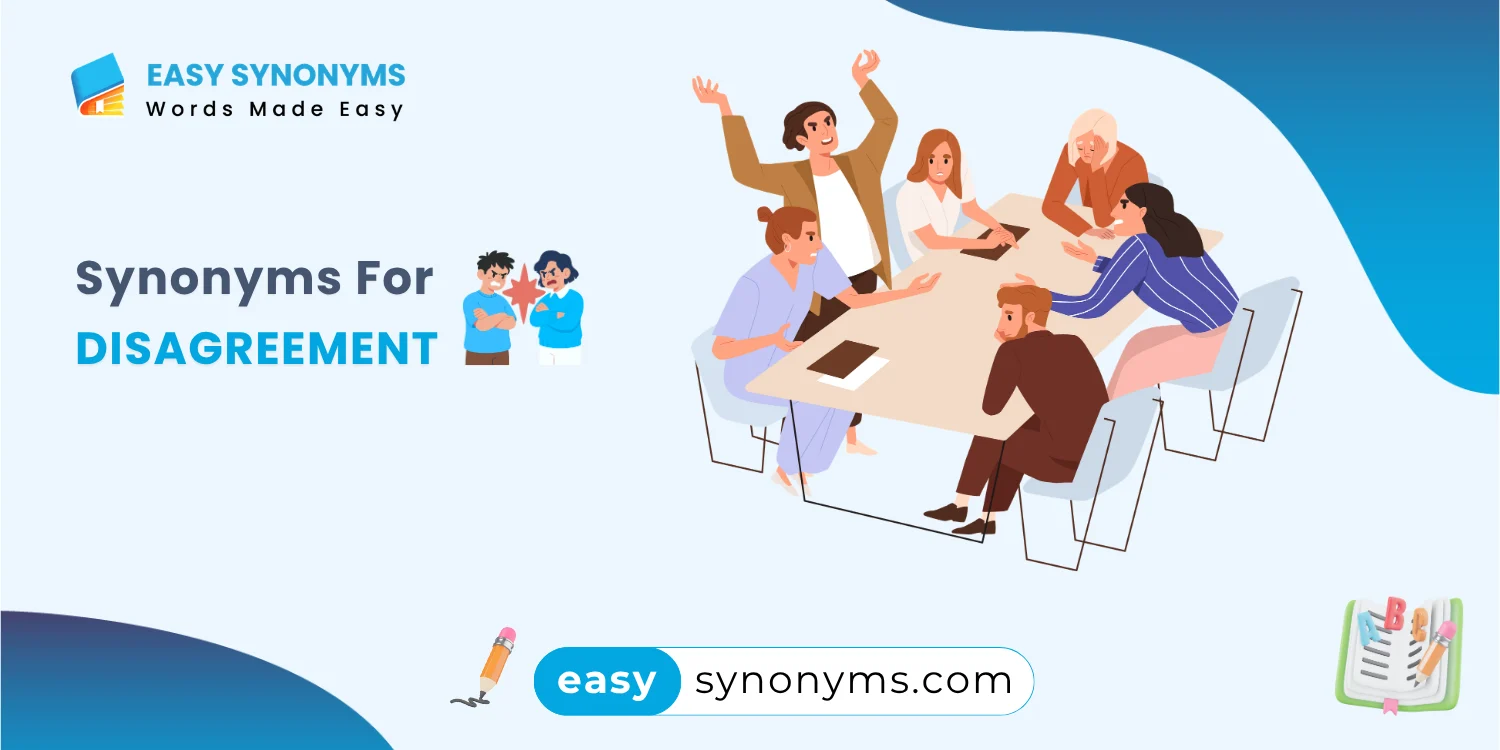

Synonyms for disagreement often come into play in everyday life. Imagine a meeting where two teammates share different opinions on a project. That moment shows how common disagreement is.
We use disagreement in conversations, emails, and debates. For example, you may politely express disagreement with a friend or strongly argue your point in a discussion.
Learning synonyms for disagreement helps you speak and write more naturally. It gives you better control over tone, whether you want to sound polite, neutral, or firm.
Students, bloggers, and content writers use these words daily. Expanding your vocabulary improves clarity, confidence, and communication in real-life situations.
📚 What Does “Synonyms for Disagreement” Really Mean?
The phrase refers to words that express a lack of agreement between people, ideas, or opinions.
In simple terms, disagreement means not sharing the same opinion or belief.
It is a noun. Native speakers use it in both formal and informal situations.
You often hear it in:
- Conversations
- Debates
- Workplace discussions
- Academic writing
🧠 Connotative Meaning
(Connotation = the emotional feeling or tone a word carries beyond its basic meaning)
Positive tone:
- Healthy debate, discussion
Negative tone:
- Conflict, argument, dispute
Neutral tone:
- Difference, divergence
📖 Etymology
The word disagreement comes from:
- Prefix: dis- (meaning “not”)
- Root: agree (from Old French agreer, meaning “to please”)
- Suffix: -ment (forming a noun)
Historical Development:
- Old English (450–1100): No direct form, but agreement-related roots existed
- Middle English (1100–1500): “Agree” enters from French
- Modern English (1500–Present): “Disagreement” forms and becomes common
🔊 Pronunciation
- US: /ˌdɪsəˈɡriːmənt/
- UK: /ˌdɪsəˈɡriːmənt/
🔤 Syllables
dis-a-gree-ment
🧩 Affixation Pattern
- Prefix: dis-
- Root: agree
- Suffix: -ment
📖 SYNONYMS LIST
Argument (noun) — /ˈɑːrɡjumənt/ | /ˈɑːɡjumənt/
Meaning: A strong disagreement where people express opposing views.
Examples:
- They had an argument about money.
- The argument lasted for hours.
Dispute (noun) — /dɪˈspjuːt/ | /dɪˈspjuːt/
Meaning: A formal or serious disagreement.
Examples:
- The companies settled the dispute.
- They entered a legal dispute.
Conflict (noun) — /ˈkɑːnflɪkt/ | /ˈkɒnflɪkt/
Meaning: A strong clash of ideas or interests.
Examples:
- The conflict grew worse.
- Their views created conflict.
Difference (noun) — /ˈdɪfrəns/ | /ˈdɪfrəns/
Meaning: A lack of agreement between opinions.
Examples:
- They accepted their differences.
- The difference is clear.
Clash (noun) — /klæʃ/ | /klæʃ/
Meaning: A sudden disagreement.
Examples:
- They had a clash at work.
- Their ideas clash often.
Debate (noun) — /dɪˈbeɪt/ | /dɪˈbeɪt/
Meaning: A formal discussion with opposing views.
Examples:
- The debate was intense.
- Students joined the debate.
Disagreement (noun) — /ˌdɪsəˈɡriːmənt/ | /ˌdɪsəˈɡriːmənt/
Meaning: A general lack of agreement.
Examples:
- There was some disagreement.
- They handled disagreement well.
Dissent (noun) — /dɪˈsent/ | /dɪˈsent/
Meaning: Public disagreement with an idea.
Examples:
- He expressed dissent.
- Dissent is allowed here.
Opposition (noun) — /ˌɑːpəˈzɪʃn/ | /ˌɒpəˈzɪʃn/
Meaning: Strong disagreement against something.
Examples:
- They showed opposition.
- The plan faced opposition.
Discord (noun) — /ˈdɪskɔːrd/ | /ˈdɪskɔːd/
Meaning: Lack of harmony or agreement.
Examples:
- Discord filled the room.
- Their team suffered discord.
Friction (noun) — /ˈfrɪkʃn/ | /ˈfrɪkʃn/
Meaning: Small disagreements causing tension.
Examples:
- There is friction between them.
- Work created friction.
Controversy (noun) — /ˈkɑːntrəvɜːrsi/ | /ˈkɒntrəvɜːsi/
Meaning: Public disagreement on a topic.
Examples:
- The issue caused controversy.
- The article sparked controversy.
Rift (noun) — /rɪft/ | /rɪft/
Meaning: A serious break caused by disagreement.
Examples:
- A rift formed in the group.
- The disagreement caused a rift.
Quarrel (noun) — /ˈkwɔːrəl/ | /ˈkwɒrəl/
Meaning: A small or personal argument.
Examples:
- They had a quarrel.
- The quarrel ended quickly.
Row (noun, UK) — /raʊ/ | /raʊ/
Meaning: A noisy argument.
Examples:
- They had a row.
- The row was loud.
Altercation (noun) — /ˌɔːltərˈkeɪʃn/ | /ˌɔːltəˈkeɪʃn/
Meaning: A heated argument.
Examples:
- An altercation broke out.
- They avoided altercation.
Disunity (noun) — /dɪsˈjuːnəti/ | /dɪsˈjuːnəti/
Meaning: Lack of agreement in a group.
Examples:
- Disunity weakens teams.
- The group showed disunity.
Divergence (noun) — /daɪˈvɜːrdʒəns/ | /daɪˈvɜːdʒəns/
Meaning: Moving in different directions in opinion.
Examples:
- There is divergence in views.
- Opinions show divergence.
Incompatibility (noun) — /ˌɪnkəmˌpætəˈbɪləti/ | /ˌɪnkəmˌpætəˈbɪləti/
Meaning: Inability to agree or work together.
Examples:
- They faced incompatibility.
- Their ideas showed incompatibility.
Disaccord (noun) — /ˌdɪsəˈkɔːrd/ | /ˌdɪsəˈkɔːd/
Meaning: Lack of agreement.
Examples:
- Disaccord grew over time.
- The meeting ended in disaccord.
Dissent (noun) — US /dɪˈsɛnt/ | UK /dɪˈsɛnt/
Meaning: A difference of opinion, especially in a formal or serious setting.
Examples:
- The judge expressed dissent in the final decision.
- Employees showed dissent during the meeting.
Discord (noun) — US /ˈdɪskɔːrd/ | UK /ˈdɪskɔːd/
Meaning: A lack of harmony or agreement between people.
Examples:
- The issue created discord in the team.
- Family discord lasted for years.
Conflict (noun) — US /ˈkɑːnflɪkt/ | UK /ˈkɒnflɪkt/
Meaning: A serious disagreement that may involve tension or argument.
Examples:
- The conflict between them grew quickly.
- Workplace conflict needs careful handling.
Dispute (noun) — US /dɪˈspjuːt/ | UK /dɪˈspjuːt/
Meaning: A formal argument or disagreement, often about facts or rights.
Examples:
- They settled the dispute peacefully.
- The contract caused a legal dispute.
Argument (noun) — US /ˈɑːrɡjumənt/ | UK /ˈɑːɡjumənt/
Meaning: A verbal disagreement between people.
Examples:
- They had an argument over money.
- The argument lasted all night.
Clash (noun) — US /klæʃ/ | UK /klæʃ/
Meaning: A strong disagreement, often sudden or intense.
Examples:
- Their opinions clashed in the debate.
- There was a clash of ideas.
Friction (noun) — US /ˈfrɪkʃən/ | UK /ˈfrɪkʃən/
Meaning: Small but ongoing disagreement or tension.
Examples:
- Friction developed between coworkers.
- Minor friction slowed progress.
Controversy (noun) — US /ˈkɑːntrəvɜːrsi/ | UK /ˈkɒntrəvɜːsi/
Meaning: Public disagreement or debate on an issue.
Examples:
- The policy caused major controversy.
- The topic remains controversial today.
Debate (noun) — US /dɪˈbeɪt/ | UK /dɪˈbeɪt/
Meaning: A formal discussion with opposing views.
Examples:
- The debate lasted for hours.
- Students joined the classroom debate.
Opposition (noun) — US /ˌɑːpəˈzɪʃən/ | UK /ˌɒpəˈzɪʃən/
Meaning: Strong disagreement or resistance to something.
Examples:
- The plan faced strong opposition.
- He spoke in opposition to the idea.
Variance (noun) — US /ˈveriəns/ | UK /ˈveəriəns/
Meaning: A difference or inconsistency between things.
Examples:
- There is variance in their opinions.
- Data showed slight variance.
Divergence (noun) — US /daɪˈvɜːrdʒəns/ | UK /daɪˈvɜːdʒəns/
Meaning: A separation into different directions or opinions.
Examples:
- There is divergence in their views.
- Their ideas show clear divergence.
Estrangement (noun) — US /ɪˈstreɪndʒmənt/ | UK /ɪˈstreɪndʒmənt/
Meaning: A breakdown in relationship due to disagreement.
Examples:
- Estrangement followed the conflict.
- The brothers lived in estrangement.
Feud (noun) — US /fjuːd/ | UK /fjuːd/
Meaning: A long-lasting and bitter disagreement.
Examples:
- The families had a long feud.
- Their feud became public.
Row (noun, informal UK) — US /raʊ/ | UK /raʊ/
Meaning: A noisy argument or disagreement.
Examples:
- They had a row at dinner.
- The row attracted attention.
Quarrel (noun) — US /ˈkwɔːrəl/ | UK /ˈkwɒrəl/
Meaning: A small or personal argument.
Examples:
- The quarrel ended quickly.
- They had a minor quarrel.
Tension (noun) — US /ˈtɛnʃən/ | UK /ˈtɛnʃən/
Meaning: A feeling of strain due to disagreement.
Examples:
- Tension filled the room.
- There was tension in the team.
Misunderstanding (noun) — US /ˌmɪsʌndərˈstændɪŋ/ | UK /ˌmɪsʌndəˈstændɪŋ/
Meaning: A disagreement caused by incorrect understanding.
Examples:
- It was just a misunderstanding.
- The issue came from poor communication.
Rift (noun) — US /rɪft/ | UK /rɪft/
Meaning: A serious break in a relationship due to disagreement.
Examples:
- The issue created a rift.
- A rift formed between friends.
Disunity (noun) — US /dɪsˈjuːnəti/ | UK /dɪsˈjuːnɪti/
Meaning: Lack of agreement or unity in a group.
Examples:
- Disunity weakened the team.
- The group showed disunity.
Synonyms for disagreement with someone
- Dispute
- Argument
- Conflict
- Clash
- Opposition
👉 Used when talking about personal or direct disagreements.
Another word for disagreement or conflict
- Discord
- Friction
- Tension
- Feud
- Rift
👉 Best for emotional or relationship-based situations.
Disagreement synonym and antonym
Synonyms:
- Dispute, Conflict, Debate, Dissent
Antonyms:
- Agreement, Harmony, Accord, Unity
Disagreement antonyms
- Agreement
- Consensus
- Harmony
- Unity
- Accord
👉 Useful in essays and formal writing.
Serious disagreement synonym
- Conflict
- Feud
- Rift
- Discord
- Confrontation
👉 Used in intense or long-term situations.
Disagreements meaning
👉 Disagreements are situations where two or more people have different opinions, views, or beliefs.
Word describing disagreement or conflict
- Clash
- Discord
- Opposition
- Tension
- Controversy
Another word for “I disagree” in an essay
- I oppose this view
- I do not agree with this argument
- I challenge this idea
- I hold a different perspective
- I respectfully disagree
👉 Perfect for academic and formal writing.
🎭 Synonyms by Tone
Positive:
- Debate, discussion
Neutral:
- Difference, divergence
Negative:
- Conflict, argument, dispute, hostility
Informal:
- Row, clash
👉 Tone matters because it changes how your message feels. “Debate” sounds calm, while “conflict” sounds intense.
⚖️ MINI COMPARISON
Disagreement vs Argument vs Conflict
- Disagreement: General difference in opinion
- Argument: Emotional or verbal clash
- Conflict: Deep or long-term opposition
Use “disagreement” for neutral tone.
“argument” for personal situations.
“conflict” for serious issues.
🧠 Context-Based Usage
Daily conversation:
“I have a disagreement with that idea.”
Writing/blogging:
Use “debate” or “difference” for a softer tone.
Professional tone:
Use “dispute” or “divergence.”
Creative writing:
Use “clash” or “rift” for drama.
⚠️ Common Mistakes & Native Usage
Mistakes:
- Using “conflict” for small issues
- Overusing “argument”
- Ignoring tone differences
Register Notes:
- Formal: dispute, divergence
- Informal: row, clash
- Spoken: argument, disagreement
- Written: conflict, debate
🧩 Real-Life Mini Scenarios
Workplace:
A team has a disagreement about strategy.
Social:
Friends have a small argument over plans.
Media:
A political debate shows strong opposition.
Storytelling:
A rift breaks a family apart.
✅ Conclusion
Learning synonyms for disagreement helps you express ideas clearly. It allows you to choose the right tone in different situations.
You can sound polite, neutral, or strong depending on your word choice. This improves both speaking and writing skills.
Writers and students benefit from using varied vocabulary. It makes communication more natural and engaging.
Start practicing today. Use these words in emails, conversations, and essays to build confidence and fluency.
📝 Exercises
Choose the Best Word:
- They had a strong ______ (conflict/debate).
- The issue caused public ______.
- Their ideas show clear ______.
- The team faced internal ______.
- He expressed his ______ openly.
- The discussion turned into an ______.
- A small ______ started between friends.
- The policy met strong ______.
- Their views created ______.
- The disagreement caused a ______ in the group.
✍️ Reflection Task
Write 3 sentences using different synonyms for disagreement in:
- A casual situation
- A formal situation
- A creative story
✅ Answer Key
conflict, controversy, divergence, disunity, dissent, argument, quarrel, opposition, friction, rift