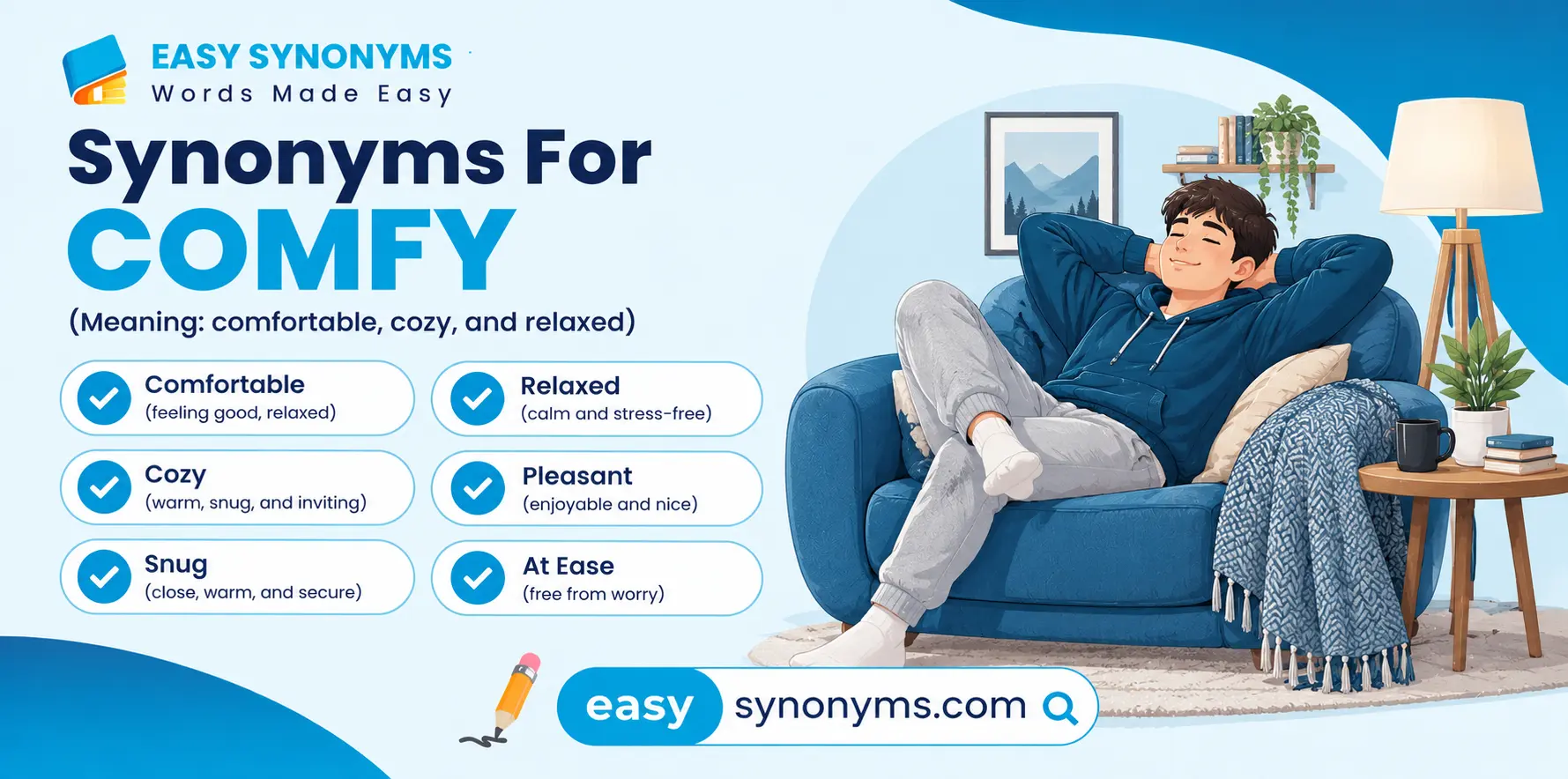

Looking for synonyms for comfy? Common alternatives include comfortable, cozy, snug, relaxed, restful, pleasant, easy, cushioned, and relaxing. The best choice depends on what you are describing, such as clothing, furniture, a room, or a relaxing experience.
“Comfy” is an informal word. It usually describes something that feels physically comfortable and pleasant. Because it has a casual tone, you may want a different word in formal writing.
What Does Comfy Mean?
Comfy is an informal form of comfortable. It describes something that gives you physical ease, relaxation, or a pleasant feeling.
For example:
- This chair is really comfy.
- I wore my comfy clothes all day.
- The hotel room was warm and comfy.
- These shoes are surprisingly comfy.
The word works especially well in casual conversations, texts, blogs, reviews, and social media posts.
However, formal writing often sounds better with words such as comfortable, pleasant, relaxing, or restful.
Quick Answer: Synonyms for Comfy
| Synonym | Best Use | Tone |
|---|---|---|
| Comfortable | General comfort | Neutral |
| Cozy | Warm and inviting spaces | Warm |
| Snug | Small, warm, and comfortable | Informal |
| Relaxing | Experiences and places | Neutral |
| Restful | Sleep and quiet environments | Neutral |
| Pleasant | General positive comfort | Formal |
| Cushioned | Seats, shoes, and furniture | Descriptive |
| Relaxed | People and moods | Neutral |
| Easy | Clothing, movement, or situations | Casual |
| Soft | Fabrics and surfaces | Descriptive |
| Homey | Homes and familiar spaces | Casual |
| Plush | Soft, luxurious items | Descriptive |
1. Comfortable
Comfortable is the closest and most direct synonym for comfy.
It works in almost any situation where “comfy” would be appropriate. Unlike “comfy,” however, it also fits formal and professional writing.
Examples:
- This sofa is very comfortable.
- I need a comfortable pair of shoes.
- The hotel provides comfortable rooms.
- She felt comfortable in her new office.
Use comfortable when you want a safe, natural choice.
2. Cozy
Cozy describes something warm, comfortable, and inviting. It is especially common for rooms, homes, blankets, cafés, and relaxing spaces.
For example:
- We spent the evening in a cozy room.
- This blanket feels so cozy.
- They found a cozy little café.
- Her apartment has a cozy atmosphere.
Unlike “comfortable,” cozy often adds a feeling of warmth and intimacy.
3. Snug
Snug means comfortably warm, secure, or pleasantly enclosed.
It often describes small spaces, clothing, blankets, or places where you feel protected.
Examples:
- The blanket kept me snug all night.
- We found a snug corner near the fireplace.
- These pajamas are warm and snug.
- The cabin felt snug during the storm.
“Snug” can also mean tight-fitting. Therefore, context matters.
4. Relaxing
Relaxing describes something that helps you rest or feel less stressed.
It is a useful alternative when “comfy” refers to an experience rather than physical softness.
Examples:
- The hotel has a very relaxing atmosphere.
- We had a relaxing afternoon at home.
- This music creates a relaxing mood.
- The massage was extremely relaxing.
Use relaxing when the main idea is peace or reduced stress.
5. Restful
Restful means providing rest or helping you recover your energy.
It works especially well for sleep, rooms, environments, and quiet activities.
Examples:
- I had a restful night’s sleep.
- The bedroom has a calm and restful atmosphere.
- We spent a restful weekend in the countryside.
- The quiet environment was very restful.
As a result, “restful” is often better than “comfy” when talking about sleep or recovery.
6. Pleasant
Pleasant describes something enjoyable, agreeable, or comfortable.
It has a more polished tone than “comfy.”
Examples:
- The room was warm and pleasant.
- We enjoyed a pleasant evening together.
- The temperature was pleasant.
- She created a pleasant working environment.
Choose pleasant when you want a more formal alternative.
7. Cushioned
Cushioned describes something that has soft material added for comfort.
It is particularly useful for chairs, seats, shoes, furniture, and protective products.
Examples:
- The chair has a cushioned seat.
- These shoes have cushioned soles.
- We bought a cushioned bench for the patio.
- The helmet has a cushioned interior.
Unlike “comfy,” this word focuses on the physical design that creates comfort.
8. Relaxed
Relaxed can describe a person, mood, atmosphere, or setting.
It is useful when “comfy” means feeling at ease rather than simply being physically comfortable.
Examples:
- I felt relaxed after the vacation.
- She has a very relaxed style.
- The restaurant has a relaxed atmosphere.
- He looked comfortable and relaxed.
Therefore, “relaxed” is often a better choice when describing a person’s state of mind.
9. Soft
Soft is a useful alternative when comfort comes from texture.
It commonly describes clothes, blankets, pillows, beds, and fabrics.
Examples:
- This sweater is incredibly soft.
- I bought a soft blanket for winter.
- The pillow has a soft cover.
- These socks feel soft against the skin.
Keep in mind that something can be soft without necessarily being comfortable.
10. Plush
Plush means soft, thick, and comfortable. It can also suggest luxury or high quality.
It commonly describes furniture, carpets, bedding, toys, and interiors.
Examples:
- The hotel has plush beds.
- We sat on a plush sofa.
- The room features plush carpeting.
- She bought a plush robe.
“Plush” is a stronger choice when you want to suggest softness and luxury at the same time.
11. Homey
Homey describes a place that feels comfortable, familiar, and welcoming.
It is especially useful for houses, apartments, cafés, and other spaces.
Examples:
- The restaurant has a homey feel.
- Her apartment is small but homey.
- The cabin had a warm, homey atmosphere.
“Homey” focuses more on the feeling of a place than its physical comfort.
12. Easy
Easy can sometimes replace “comfy” in casual contexts. It works particularly well for clothing, movement, or situations that require little effort.
Examples:
- These pants are easy to wear all day.
- I prefer easy clothes when traveling.
- The shoes are easy on my feet.
- We had an easy, comfortable afternoon.
However, “easy” is not a direct synonym for “comfortable” in every sentence.
Synonyms for Comfy Clothes
When describing clothing, these alternatives can work well:
- Comfortable
- Soft
- Relaxed
- Loose-fitting
- Casual
- Lightweight
- Breathable
- Stretchy
- Cozy
- Easygoing
For example:
These are my favorite comfy clothes.
You could write:
These are my favorite comfortable clothes.
Or:
These are my favorite cozy clothes for staying home.
The best option depends on the specific feature you want to highlight.
Synonyms for a Comfy Chair
When describing a chair, useful alternatives include:
- Comfortable
- Cushioned
- Padded
- Supportive
- Plush
- Soft
- Relaxing
- Cozy
For example:
This is a really comfy chair.
You could say:
This is a comfortable chair with excellent support.
Or:
This is a plush, cushioned chair.
The second version gives the reader more information about why the chair feels comfortable.
Synonyms for a Comfy Bed
For beds, common alternatives include:
- Comfortable
- Cozy
- Soft
- Supportive
- Restful
- Plush
- Cushioned
- Relaxing
Examples:
- The hotel has a comfortable bed.
- We slept in a cozy bed.
- The mattress is soft but supportive.
- The room provides a restful sleeping environment.
In this context, restful often sounds more natural when you are describing the quality of sleep.
Synonyms for a Comfy Room
If you want to describe a comfortable room, consider:
- Cozy
- Welcoming
- Relaxing
- Homey
- Pleasant
- Inviting
- Comfortable
- Warm
For example:
The room was comfy and warm.
You could write:
The room was cozy, warm, and inviting.
This version gives the sentence a more descriptive feel.
Comfy vs. Comfortable
Comfy and comfortable have almost the same basic meaning.
The main difference is register.
Comfy is informal and conversational.
Comfortable is neutral and works in both casual and formal writing.
Compare:
This sofa is really comfy.
This sofa is really comfortable.
Both sentences are natural. However, “comfortable” is the better choice for formal descriptions, professional writing, product information, and academic work.
Comfy vs. Cozy
These words overlap, but they are not identical.
Comfy focuses mainly on physical comfort.
Cozy often suggests warmth, comfort, and a pleasant atmosphere.
Compare:
These pajamas are comfy.
This bedroom is cozy.
You can also use both:
The cabin was cozy and comfy.
That combination works well in casual writing.
Comfy vs. Snug
Comfy means generally comfortable.
Snug suggests warmth, security, or a close-fitting feeling.
For example:
This sofa is comfy.
This blanket keeps me snug.
However, “snug” can describe something that fits tightly. Therefore, it does not always work as a direct replacement.
Comfy vs. Relaxing
Comfy usually describes physical comfort.
Relaxing focuses more on reducing stress or creating a calm feeling.
Compare:
This chair is comfy.
This spa is relaxing.
A place can be both:
The hotel room was comfy and relaxing.
Comfy vs. Plush
Comfy is a broad term.
Plush suggests softness, thickness, and sometimes luxury.
For example:
We bought a comfy sofa.
We bought a plush velvet sofa.
The second sentence gives a stronger image of softness and luxury.
Formal Alternatives to Comfy
If you need a more professional word, consider these options:
- Comfortable
- Pleasant
- Relaxing
- Restful
- Supportive
- Convenient
- Welcoming
- Suitable
For example, instead of:
The office has a comfy environment.
Use:
The office has a comfortable and welcoming environment.
For formal writing, comfortable is usually the safest replacement.
Casual Alternatives to Comfy
In everyday conversation, these words can sound natural:
- Cozy
- Snug
- Soft
- Relaxed
- Homey
- Easy
- Chill
- Pleasant
For example:
I just want to wear something comfy.
You could also say:
I just want to wear something cozy.
Or:
I just want to wear something soft and relaxed.
Positive Alternatives to Comfy
If you want to emphasize a positive feeling, try:
- Comfortable
- Cozy
- Pleasant
- Relaxing
- Inviting
- Welcoming
- Restful
- Enjoyable
These words can make descriptions more specific instead of simply repeating “comfy.”
Common Mistakes When Using Comfy Synonyms
Using Cozy for Everything
“Cozy” does not fit every situation.
A pair of shoes can be comfortable, but “cozy shoes” may sound unusual depending on the context.
Using Snug When You Mean Loose
“Snug” can mean close-fitting. Therefore, it may not work when describing loose clothing.
Using Soft as a Direct Replacement
Softness and comfort are related, but they are not the same.
A soft chair might still provide poor support.
Using Comfy in Formal Writing
“Comfy” is informal. In professional or academic writing, comfortable is usually more appropriate.
Examples of Comfy in Sentences
Here are several natural examples:
- These shoes are incredibly comfy.
- I love wearing comfy clothes at home.
- The couch looks old, but it is surprisingly comfy.
- We found a comfy little café near the park.
- This blanket is warm and comfy.
- I had a comfy seat on the train.
- The hotel room was simple but comfy.
- She changed into her favorite comfy pajamas.
- This chair is perfect for long work sessions because it is so comfy.
- We spent the evening in a comfy and cozy room.
Related Words for Comfy
Words connected with comfort include:
- Comfort
- Comfortable
- Comfortably
- Cozy
- Coziness
- Relax
- Relaxed
- Relaxing
- Rest
- Restful
- Soft
- Warm
- Snug
- Cushioned
- Plush
- Supportive
- Pleasant
- Inviting
These words can help you describe different types of comfort more precisely.
Antonyms of Comfy
The opposite of comfy can depend on the situation.
Common antonyms include:
- Uncomfortable
- Awkward
- Painful
- Hard
- Rough
- Restrictive
- Restless
- Uneasy
- Disagreeable
- Irritating
For example:
These shoes are uncomfortable.
The chair feels hard.
The tight clothing is restrictive.
Each antonym highlights a different type of discomfort.
FAQs About Synonyms for Comfy
What is the best synonym for comfy?
Comfortable is the closest general synonym for “comfy.” Other useful choices include cozy, snug, relaxing, restful, and pleasant.
What is a formal synonym for comfy?
Comfortable is the most natural formal alternative. Depending on the context, pleasant, restful, or relaxing can also work.
Is cozy the same as comfy?
Not exactly. “Comfy” mainly describes comfort, while “cozy” often suggests warmth, comfort, and an inviting atmosphere.
What is another word for comfy clothes?
Good alternatives include comfortable, cozy, soft, relaxed, casual, lightweight, breathable, and easy. The best choice depends on the type of clothing.
What is another word for a comfy chair?
You can say comfortable chair, cushioned chair, padded chair, plush chair, supportive chair, or relaxing chair.
Is comfy a professional word?
“Comfy” is informal. For professional, academic, or formal writing, comfortable is generally a better choice.
What is a synonym for comfy and cozy?
Comfortable can cover both meanings. Other possibilities include snug, relaxing, homey, inviting, and pleasant, depending on the context.
Conclusion
The best synonyms for comfy depend on what you want to describe. Comfortable is the closest general alternative, while cozy adds warmth and an inviting feeling. Similarly, snug suggests security, relaxing focuses on calmness, and restful works especially well for sleep and recovery.
For clothing, soft, comfortable, and relaxed can work well. For furniture, consider cushioned, padded, or plush. Meanwhile, homey and inviting are useful for rooms and spaces.
Because “comfy” is informal, choose comfortable when you need a neutral or professional tone. In casual conversations, however, “comfy” remains a natural and friendly choice.