
Creating high-quality digital content has become easier than ever. Whether someone is managing social media accounts, running an online business, creating marketing materials, or simply preserving personal memories, photos and videos play an important role in digital communication.
In the past, improving images and videos often required professional editing skills and expensive software. Today, artificial intelligence is making many editing tasks more accessible. Users can improve image quality, adjust visual details, remove unwanted elements, and enhance video footage with tools that require less manual effort.
However, getting good results involves more than choosing an editing application. Understanding how AI editing works, selecting the right tools, and maintaining a computer that can handle creative workloads are equally important.
Let’s explore how AI-powered editing tools can improve everyday content creation and how users can build a smoother editing workflow.
1. How Is AI Changing the Way People Edit Photos?
Traditional photo editing often requires users to understand multiple editing controls, including exposure, contrast, sharpness, color balance, and background adjustments. Although these controls provide flexibility, beginners may find them difficult to manage.
AI-powered editing tools simplify several of these processes by analyzing image content and applying suitable adjustments.
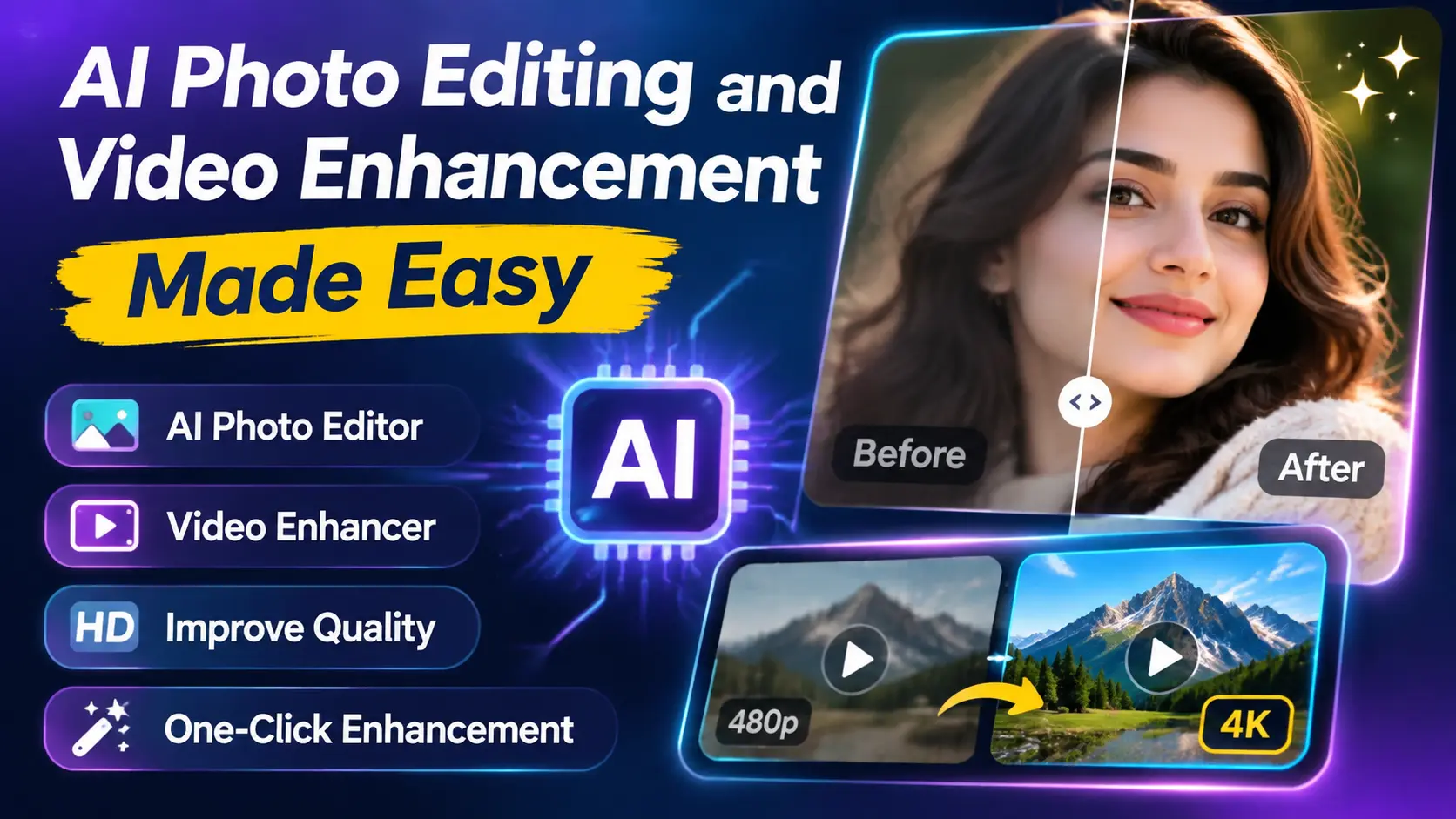
An AI photo editor can help users improve images through automated editing capabilities. Depending on the available features, AI-based tools may assist with tasks such as enhancing image appearance, removing backgrounds, correcting visual imperfections, and adjusting image details.
These capabilities are useful in several situations.
Social Media Content: Content creators can improve photographs before sharing them on Instagram, Facebook, or other platforms.
Product Photography: Online sellers can make product images more presentable by improving lighting, clarity, and backgrounds.
Personal Photography: Everyday users can enhance old photographs or improve images captured in less-than-ideal lighting conditions.
Marketing Materials: Businesses can prepare more polished visuals for advertisements, websites, and promotional campaigns.
One important advantage of AI editing is convenience. Instead of manually adjusting every detail, users can let the software handle certain repetitive tasks and focus more on the creative aspects of their projects.
However, AI results are not always perfect. Users should review edited images carefully to ensure that important details, textures, and natural appearances remain accurate.
2. Why Is Video Enhancement Important for Digital Content?
Videos have become an essential part of online communication. Businesses use them for product demonstrations, advertisements, tutorials, and customer education. Individuals create videos for social media, personal projects, and entertainment.
However, not every recording has ideal visual quality. Footage may appear blurry, noisy, poorly lit, or less detailed than expected.
This is where AI-powered enhancement can be useful.
A video enhancer can help improve the visual appearance of footage through AI-assisted processing. Depending on the tool’s capabilities, video enhancement may involve improving sharpness, reducing visual noise, increasing resolution, or refining details.
Some common uses include:
- Improving the appearance of older video recordings.
- Making low-resolution footage more suitable for modern screens.
- Enhancing videos intended for social media.
- Improving the clarity of personal recordings.
- Preparing visual content for presentations and marketing campaigns.
AI enhancement can save time compared with performing every adjustment manually. It can also make certain editing tasks more approachable for people without advanced video production experience.
Nevertheless, enhancement has limitations. AI cannot always recover details that were never captured in the original recording. The final result depends on the source footage, processing method, and selected settings.
For the best outcome, always compare the enhanced version with the original before publishing.
3. What Should You Consider Before Choosing an AI Editing Tool?
Not every AI editing tool offers the same features. Some focus on image correction, while others specialize in video processing or creative effects.
Before choosing a tool, consider the following factors.
Ease of Use: Beginners should look for a straightforward interface with simple controls and clear instructions.
Editing Features: Check whether the tool supports the specific tasks you need, such as background removal, image enhancement, or video upscaling.
Output Quality: Look for tools that preserve natural details rather than creating artificial-looking results.
Processing Speed: Some AI editing tasks require considerable processing power. A tool that handles your typical workload efficiently can save time.
File Compatibility: Make sure the tool supports the image and video formats you regularly use.
Privacy: Review how uploaded files are handled, particularly when editing personal photographs, business materials, or confidential content.
Choosing software based on your actual editing requirements is generally more useful than selecting a tool simply because it offers the largest number of features.
4. Why Does Your PC Performance Matter for AI Editing?
AI editing can involve resource-intensive operations. Image processing, video enhancement, rendering, and exporting may require considerable CPU, GPU, RAM, and storage resources.
A computer with limited resources may take longer to process large files or handle multiple editing tasks simultaneously.
For example, editing a high-resolution photograph may require more memory than working with a smaller image. Similarly, processing longer videos or higher-resolution footage can increase hardware demands.
Several factors influence editing performance:
- Processor speed and available CPU resources.
- Graphics card capabilities.
- Available RAM.
- Storage speed and free disk space.
- Compatible graphics and hardware drivers.
- Background applications consuming system resources.
Before starting demanding creative projects, close unnecessary applications and make sure sufficient storage space is available.
It is also worth checking whether your hardware meets the editing software’s recommended requirements. This can help prevent unnecessary frustration during demanding projects.
5. Keep Your Computer Clean with Advanced SystemCare
A well-maintained computer makes everyday creative work more convenient. However, regular software installations, temporary files, browser caches, and unnecessary background applications can gradually create system clutter.
Advanced SystemCare by IObit is designed to help users clean, optimize, and maintain their Windows computers.
Its features include junk file cleaning, privacy cleaning, startup optimization, and other PC maintenance options.
For people who regularly work with image and video editing applications, keeping unnecessary files and startup activity under control can make routine computer maintenance easier.
Advanced SystemCare can help with tasks such as:
- Identifying unnecessary junk files.
- Cleaning supported browser and application traces.
- Managing startup applications.
- Monitoring certain aspects of system performance.
- Performing regular PC maintenance.
It is important to remember that cleaning software does not replace hardware upgrades or directly guarantee faster AI processing. However, maintaining available storage and reducing unnecessary system activity can support a more organized working environment.
Users should also review cleaning recommendations before deleting files, especially when working with active editing projects and temporary media files.
6. Keep Graphics and Other Device Drivers Updated
Graphics cards play an important role in many creative applications. Depending on the software, certain image and video processing tasks can use GPU acceleration to improve processing efficiency.
However, outdated or incompatible drivers may sometimes create display problems, application instability, or hardware compatibility issues.
Windows Update provides driver updates for supported devices, while hardware manufacturers also publish drivers through their official websites.
For users who want a more convenient driver management process, Driver Booster by IObit is worth considering.
Driver Booster is designed to identify outdated, missing, or incorrect drivers and help users update them.
This can be particularly relevant for people who regularly work with graphics applications, video editing software, and other demanding programs.
Before installing driver updates, check compatibility with your graphics card and operating system. Creating a restore point before major changes is also a sensible precaution.
Keeping drivers updated can help maintain hardware compatibility and resolve certain device-related issues, although it does not guarantee that every editing application will run faster.
7. Remove Unnecessary Editing Software and Applications
Creative users often experiment with different editing applications. They may install several photo editors, video converters, screen recorders, and supporting utilities to find the right workflow.
Over time, some of these applications become unnecessary.
Unused software can occupy valuable storage space and may leave behind files or browser extensions after removal.
IObit Uninstaller provides a convenient way to manage installed applications. It is designed to remove unwanted programs, Windows apps, browser extensions, and associated leftover files.
This can be helpful when testing different editing tools or removing applications that are no longer part of your creative workflow.
For example, if you install several video editing applications while comparing their features, IObit Uninstaller can help you remove the programs you decide not to keep.
Before uninstalling software, make sure your active projects, custom presets, and important application settings are backed up.
Keeping your installed software organized makes it easier to manage storage and maintain a cleaner working environment.
8. Build a More Efficient AI Editing Workflow
Using AI editing tools effectively requires a little planning. Instead of making random adjustments, follow a consistent process that helps you maintain quality and avoid unnecessary work.
Here is a simple workflow for everyday creators.
Step 1: Organize Your Original Files
Create separate folders for original photographs, video recordings, edited versions, and final exports. This makes it easier to locate files and avoid accidental overwriting.
Step 2: Select the Right Editing Tool
Choose an AI photo editor for image-related tasks and an appropriate video enhancement tool for improving footage.
Step 3: Review the Original Quality
Check the image or video before applying AI adjustments. Identify what needs improvement, such as brightness, sharpness, background quality, or resolution.
Step 4: Apply AI Enhancements
Use the available features according to your requirements. Avoid applying unnecessary effects that make the final result look artificial.
Step 5: Review the Output
Compare the edited version with the original. Check important details, colors, textures, and overall visual quality.
Step 6: Maintain Your Computer
Remove unnecessary applications, review startup programs, and keep compatible drivers updated.
Following these steps can help make content creation more organized while reducing avoidable editing problems.
9. Which IObit Products Can Support Your Creative Workflow?
AI editing tools handle image and video enhancement, but maintaining the computer used for creative work is equally important.
IObit offers three products that address different aspects of Windows PC maintenance.
Advanced SystemCare – For PC Cleaning and Optimization
Advanced SystemCare is designed to help users clean, optimize, and maintain their computers.
Its features include junk file cleaning, startup optimization, privacy cleaning, and other system maintenance options.
It can be useful for content creators who want to keep their Windows computers organized while managing multiple creative applications.
Driver Booster – For Driver Management
Driver Booster focuses on identifying outdated, missing, and incorrect device drivers.
It can help users manage driver updates more conveniently, which is relevant for computers using graphics cards and other hardware components for creative workloads.
IObit Uninstaller – For Managing Installed Applications
IObit Uninstaller helps remove unwanted programs, browser extensions, Windows apps, and associated leftover files.
It can be useful for creators who frequently test new editing applications and want better control over their installed software.
Each product has a different purpose. Advanced SystemCare focuses on system maintenance, Driver Booster handles driver management, and IObit Uninstaller helps manage installed applications.
These products do not replace dedicated AI photo or video editing tools. Instead, they support the maintenance of the Windows computer used for creative work.
Conclusion
Artificial intelligence is making photo editing and video enhancement more accessible to everyday users. From improving product photographs to refining older video recordings, AI-powered tools can simplify many creative tasks.
However, achieving good results also depends on selecting suitable editing software, understanding its limitations, and maintaining a computer that can handle the workload.
Advanced SystemCare, Driver Booster, and IObit Uninstaller provide different solutions for keeping Windows computers clean, updated, and organized.
By combining suitable AI editing tools with responsible PC maintenance, users can build a more efficient creative workflow and spend more time producing quality digital content.
Also Read