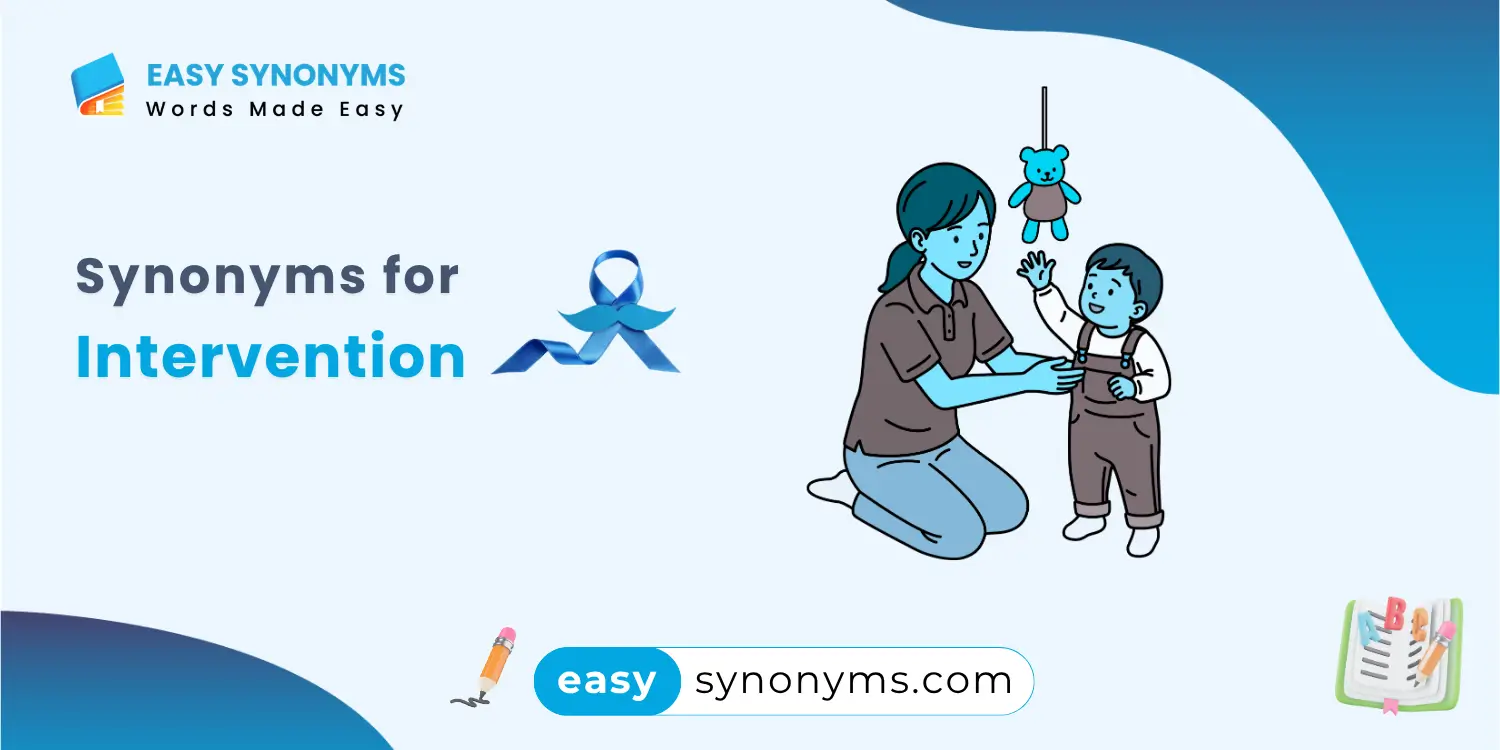

Synonyms of intervention often appear in everyday English when people talk about stepping in to help, solve problems, or control a situation. Imagine a teacher stepping in to stop a classroom fight — that is intervention in action.
In real life, synonyms of intervention help speakers express different levels of action, support, or control. A doctor may perform a medical intervention, while a friend may offer gentle assistance.
Many students and writers search for synonyms of intervention because the word appears in academic writing, social discussions, and news reports. Using different alternatives improves clarity and avoids repetition.
Understanding synonyms of intervention helps students, bloggers, content writers, and daily English users express ideas clearly and professionally. Now, let’s explore what this word really means and how native speakers use it.
📚 What Does “Synonyms of Intervention” Really Mean?
The word intervention means stepping into a situation to change or improve it.
It usually describes an action taken to solve a problem, prevent harm, or guide a situation in a better direction.
Native speakers often use this word in medical, social, political, and educational contexts. For example, doctors perform medical intervention, while governments may take policy intervention.
Part of Speech: Noun
Simple Definition: An action taken to become involved in a situation to improve or control it.
🧠 Connotative Meaning
Positive tone:
Intervention often suggests help, support, and protection.
Example: A teacher’s intervention helped the student succeed.
Negative tone:
Sometimes intervention suggests control or interference.
Example: Government intervention limited free business.
Neutral tone:
In academic writing, intervention remains neutral and factual.
(Connotation = emotional meaning attached to a word.)
📖 Etymology
The word intervention comes from Latin intervenire, meaning “to come between or step in.”
Old English (450–1100)
The exact word did not exist, but similar ideas of stepping in appeared in early Germanic expressions.
Middle English (1100–1500)
The word entered English through French influence and Latin roots.
Modern English (1500–Present)
Intervention became common in legal, medical, and political writing.
Pronunciation
US: /ˌɪntərˈvenʃən/
UK: /ˌɪntəˈvenʃən/
Syllables
in-ter-ven-tion
Affixation Pattern
Root: vene (come)
Prefix: inter (between)
Suffix: -tion (action or process)
📖 Synonyms List
Assistance (Noun) — /əˈsɪstəns/ | UK /əˈsɪstəns/
Meaning: Help given to solve a problem or support someone.
Examples:
- The nurse provided quick assistance to the patient.
- We need assistance during emergencies.
Aid (Noun) — /eɪd/ | UK /eɪd/
Meaning: Support or help given in difficult situations.
Examples:
- The charity offered financial aid.
- Medical aid arrived quickly.
Involvement (Noun) — /ɪnˈvɑːlvmənt/ | UK /ɪnˈvɒlvmənt/
Meaning: Taking part in a situation or activity.
Examples:
- His involvement improved the project.
- Teacher involvement helps students learn.
Interference (Noun) — /ˌɪntərˈfɪrəns/ | UK /ˌɪntəˈfɪərəns/
Meaning: Unwanted action that interrupts or controls a situation.
Examples:
- Government interference slowed business growth.
- Parental interference upset the teacher.
Mediation (Noun) — /ˌmiːdiˈeɪʃən/ | UK /ˌmiːdiˈeɪʃən/
Meaning: Helping two sides solve a conflict peacefully.
Examples:
- The lawyer offered mediation.
- Mediation solved the dispute.
Support (Noun) — /səˈpɔːrt/ | UK /səˈpɔːt/
Meaning: Help that strengthens or improves a situation.
Examples:
- Family support changed his life.
- Emotional support matters in stress.
Help (Noun) — /help/ | UK /help/
Meaning: Action that makes something easier or better.
Examples:
- She asked for help.
- Help arrived quickly.
Action (Noun) — /ˈækʃən/ | UK /ˈækʃən/
Meaning: Steps taken to solve a problem.
Examples:
- The company took action immediately.
- Quick action saved lives.
Step-in (Noun/Verb) — /ˈstep ɪn/ | UK /ˈstep ɪn/
Meaning: Entering a situation to control or help.
Examples:
- The manager stepped in quickly.
- Parents stepped in to help.
Prevention (Noun) — /prɪˈvenʃən/ | UK /prɪˈvenʃən/
Meaning: Action taken to stop a problem.
Examples:
- Early prevention saved money.
- Disease prevention is important.
Control (Noun) — /kənˈtroʊl/ | UK /kənˈtrəʊl/
Meaning: Power to manage or direct a situation.
Examples:
- Government took control.
- Control reduced the crisis.
Supervision (Noun) — /ˌsuːpərˈvɪʒən/ | UK /ˌsuːpəˈvɪʒən/
Meaning: Watching and guiding a situation.
Examples:
- Teacher supervision improved behavior.
- Supervision ensures safety.
Regulation (Noun) — /ˌreɡjəˈleɪʃən/ | UK /ˌreɡjʊˈleɪʃən/
Meaning: Rules used to control actions.
Examples:
- Government regulation protects workers.
- New regulation changed policy.
Arbitration (Noun) — /ˌɑːrbɪˈtreɪʃən/ | UK /ˌɑːbɪˈtreɪʃən/
Meaning: A decision made by a neutral person.
Examples:
- Arbitration ended the dispute.
- The court suggested arbitration.
Counseling (Noun) — /ˈkaʊnsəlɪŋ/ | UK /ˈkaʊnsəlɪŋ/
Meaning: Professional advice to solve problems.
Examples:
- Counseling helped the student.
- Therapy includes counseling.
Guidance (Noun) — /ˈɡaɪdəns/ | UK /ˈɡaɪdəns/
Meaning: Advice or direction given to someone.
Examples:
- Teacher guidance improved writing.
- Parents gave guidance.
Interventionism (Noun) — /ˌɪntərˈvenʃənɪzəm/ | UK /ˌɪntəˈvenʃənɪzəm/
Meaning: Policy of active involvement.
Examples:
- Economic interventionism increased spending.
- Political interventionism shaped policy.
Intercession (Noun) — /ˌɪntərˈseʃən/ | UK /ˌɪntəˈseʃən/
Meaning: Acting on behalf of someone.
Examples:
- The priest offered intercession.
- Her intercession helped the family.
Engagement (Noun) — /ɪnˈɡeɪdʒmənt/ | UK /ɪnˈɡeɪdʒmənt/
Meaning: Active participation in a situation.
Examples:
- Community engagement helped development.
- Student engagement improved results.
Participation (Noun) — /pɑːrˌtɪsɪˈpeɪʃən/ | UK /pɑːˌtɪsɪˈpeɪʃən/
Meaning: Taking part in an activity.
Examples:
- Participation increased learning.
- Team participation matters.
Insertion (Noun) — /ɪnˈsɜːrʃən/ | UK /ɪnˈsɜːʃən/
Meaning: Placing something into a situation.
Examples:
- Military insertion began early.
- Policy insertion changed rules.
Management (Noun) — /ˈmænɪdʒmənt/ | UK /ˈmænɪdʒmənt/
Meaning: Controlling or handling a situation.
Examples:
- Crisis management saved the company.
- Good management reduces stress.
Correction (Noun) — /kəˈrekʃən/ | UK /kəˈrekʃən/
Meaning: Fixing a mistake or problem.
Examples:
- Teacher made a correction.
- Correction improved writing.
Resolution (Noun) — /ˌrezəˈluːʃən/ | UK /ˌrezəˈluːʃən/
Meaning: Solving a conflict or issue.
Examples:
- Conflict resolution helped peace.
- Resolution ended the argument.
Adjustment (Noun) — /əˈdʒʌstmənt/ | UK /əˈdʒʌstmənt/
Meaning: Small change to improve a situation.
Examples:
- Policy adjustment helped workers.
- Adjustment reduced errors.
Intervention Measure (Noun) — /ˌɪntərˈvenʃən ˈmɛʒər/ | UK /ˌɪntəˈvenʃən ˈmeʒə/
Meaning: A specific action taken to solve a problem or improve a situation.
Examples:
- The government introduced an intervention measure.
- Early intervention measures reduced damage.
Remedy (Noun) — /ˈremədi/ | UK /ˈremədi/
Meaning: A solution to fix a problem.
Examples:
- The doctor suggested a remedy.
- Education is a remedy for poverty.
Treatment (Noun) — /ˈtriːtmənt/ | UK /ˈtriːtmənt/
Meaning: Medical or corrective action to improve a condition.
Examples:
- The patient received treatment.
- Early treatment saved his life.
Interruption (Noun) — /ˌɪntəˈrʌpʃən/ | UK /ˌɪntəˈrʌpʃən/
Meaning: A break or stop in a process.
Examples:
- The call caused an interruption.
- Power interruption stopped work.
Interposition (Noun) — /ˌɪntərpəˈzɪʃən/ | UK /ˌɪntəpəˈzɪʃən/
Meaning: Placing oneself between parties.
Examples:
- His interposition stopped the fight.
- Diplomatic interposition helped peace.
Involvement Action (Noun) — /ɪnˈvɑːlvmənt ˈækʃən/ | UK /ɪnˈvɒlvmənt ˈækʃən/
Meaning: Active participation to solve an issue.
Examples:
- Teacher involvement action helped students.
- Community involvement action improved safety.
Assistance Program (Noun) — /əˈsɪstəns ˈproʊɡræm/ | UK /əˈsɪstəns ˈprəʊɡræm/
Meaning: Organized help for people.
Examples:
- The city launched an assistance program.
- Assistance programs support families.
Safeguard (Noun) — /ˈseɪfɡɑːrd/ | UK /ˈseɪfɡɑːd/
Meaning: Protection against harm.
Examples:
- Laws act as safeguards.
- Education is a safeguard.
Oversight (Noun) — /ˈoʊvərsaɪt/ | UK /ˈəʊvəsaɪt/
Meaning: Careful supervision or monitoring.
Examples:
- Government oversight increased safety.
- Oversight improved operations.
Moderation (Noun) — /ˌmɑːdəˈreɪʃən/ | UK /ˌmɒdəˈreɪʃən/
Meaning: Control to keep balance.
Examples:
- Moderation helped discussions.
- Social media uses moderation.
Negotiation (Noun) — /nɪˌɡoʊʃiˈeɪʃən/ | UK /nɪˌɡəʊʃiˈeɪʃən/
Meaning: Discussion to reach agreement.
Examples:
- Negotiation solved the conflict.
- Peace came through negotiation.
Settlement (Noun) — /ˈsetlmənt/ | UK /ˈsetlmənt/
Meaning: Agreement to end a dispute.
Examples:
- The court reached a settlement.
- Settlement avoided conflict.
Prevention Action (Noun) — /prɪˈvenʃən ˈækʃən/ | UK /prɪˈvenʃən ˈækʃən/
Meaning: Steps to stop problems early.
Examples:
- Prevention action saved lives.
- Health prevention action works.
Control Measure (Noun) — /kənˈtroʊl ˈmɛʒər/ | UK /kənˈtrəʊl ˈmeʒə/
Meaning: Steps to manage situations.
Examples:
- Control measures reduced risk.
- Safety control measures help.
Monitoring (Noun) — /ˈmɑːnɪtərɪŋ/ | UK /ˈmɒnɪtərɪŋ/
Meaning: Watching a situation carefully.
Examples:
- Monitoring improved health care.
- Monitoring reduces mistakes.
Handling (Noun) — /ˈhændlɪŋ/ | UK /ˈhændlɪŋ/
Meaning: Managing a problem.
Examples:
- Crisis handling was effective.
- Handling stress is important.
Direction (Noun) — /dəˈrekʃən/ | UK /daɪˈrekʃən/
Meaning: Guiding a situation.
Examples:
- Leadership gave direction.
- Teacher direction helped.
Superintendence (Noun) — /ˌsuːpərɪnˈtendəns/ | UK /ˌsuːpərɪnˈtendəns/
Meaning: Management and supervision.
Examples:
- Superintendence improved work.
- School superintendence matters.
Interference Action (Noun) — /ˌɪntərˈfɪrəns ˈækʃən/ | UK /ˌɪntəˈfɪərəns ˈækʃən/
Meaning: Action that interrupts a situation.
Examples:
- Political interference action caused tension.
- Media interference affected policy.
Intervention Strategy (Noun) — /ˌɪntərˈvenʃən ˈstrætədʒi/ | UK /ˌɪntəˈvenʃən ˈstrætədʒi/
Meaning: Planned action to solve problems.
Examples:
- Schools use intervention strategies.
- Doctors apply intervention strategies.
Stabilization (Noun) — /ˌsteɪbələˈzeɪʃən/ | UK /ˌsteɪbəlaɪˈzeɪʃən/
Meaning: Making a situation stable.
Examples:
- Economic stabilization helped growth.
- Stabilization reduced risk.
Emergency Action (Noun) — /ɪˈmɜːrdʒənsi ˈækʃən/ | UK /ɪˈmɜːdʒənsi ˈækʃən/
Meaning: Immediate action in crisis.
Examples:
- Emergency action saved lives.
- Police took emergency action.
Protective Action (Noun) — /prəˈtektɪv ˈækʃən/ | UK /prəˈtektɪv ˈækʃən/
Meaning: Action to protect others.
Examples:
- Protective action stopped harm.
- Safety teams used protective action.
Correction Measure (Noun) — /kəˈrekʃən ˈmɛʒər/ | UK /kəˈrekʃən ˈmeʒə/
Meaning: Steps to fix errors.
Examples:
- Correction measures improved results.
- Schools use correction measures.
Recovery Action (Noun) — /rɪˈkʌvəri ˈækʃən/ | UK /rɪˈkʌvəri ˈækʃən/
Meaning: Action taken to restore a situation.
Examples:
- Recovery action helped the economy.
- Recovery action restored balance.
🎯 Synonyms by Tone
Positive
- assistance
- aid
- support
- guidance
- remedy
- treatment
- safeguard
These words suggest help and protection.
Neutral
- intervention
- action
- involvement
- monitoring
- management
- regulation
These words sound professional and factual.
Negative
- interference
- control
- interruption
These words suggest unwanted action.
Tone matters because it changes how the message feels to the reader.
⚖️ Mini Comparison
Intervention vs Assistance vs Interference
Intervention: Neutral action to improve a situation.
Assistance: Friendly and supportive help.
Interference: Unwanted or controlling action.
Use intervention in academic writing, assistance in friendly situations, and interference when action feels negative.
🧠 Context-Based Usage
Daily Conversation
People often say help or support instead of intervention.
Writing or Blogging
Writers use intervention in social or health topics.
Professional or Academic Tone
Doctors, teachers, and governments use intervention.
Creative or Informal Use
Storytellers use intervention in dramatic scenes.
⚠️ Common Mistakes & Native Usage
Mistakes Learners Make
Using intervention in casual conversation too often.
Confusing intervention with interference.
Using it in positive situations where help fits better.
Register Notes
Formal word
Common in writing
Less common in casual speech
🧩 Real-Life Mini Scenarios
Workplace
A manager intervenes to solve conflict.
Social Situation
Friends intervene to help someone.
Media
News reports government intervention.
Writing
Authors describe intervention in stories.
✅ Conclusion
Learning synonyms of intervention helps you express ideas more clearly and naturally in English. It reduces repetition and improves writing quality.
Students, bloggers, and professionals benefit from using different synonyms in essays and communication. It makes language more precise and engaging.
Understanding tone and context helps you choose the right synonym in every situation. This builds confidence in speaking and writing.
Start practicing these synonyms in emails, essays, and daily conversations to strengthen your vocabulary and communication skills 📘
📝 Exercise Section
Choose the correct word
- The doctor performed medical ___ (intervention / confusion)
- The charity gave financial ___ (aid / silence)
- The teacher provided ___ (guidance / anger)
- The government introduced ___ (regulation / noise)
- The team reached a ___ (settlement / fight)
- The nurse offered ___ (assistance / problem)
- The manager took quick ___ (action / delay)
- The lawyer suggested ___ (mediation / shouting)
- The policy ensured ___ (safeguard / risk)
- The leaders started ___ (negotiation / conflict)
- The school used early ___ (intervention / failure)
- The company applied crisis ___ (management / confusion)
Reflection Task
Write 5 sentences using different synonyms of intervention in workplace or social situations.
Answer Key:
intervention, aid, guidance, regulation, settlement, assistance, action, mediation, safeguard, negotiation, intervention, management